
Why Your Belly Fat Won't Shift: Testosterone, Insulin and Blood Sugar in Men
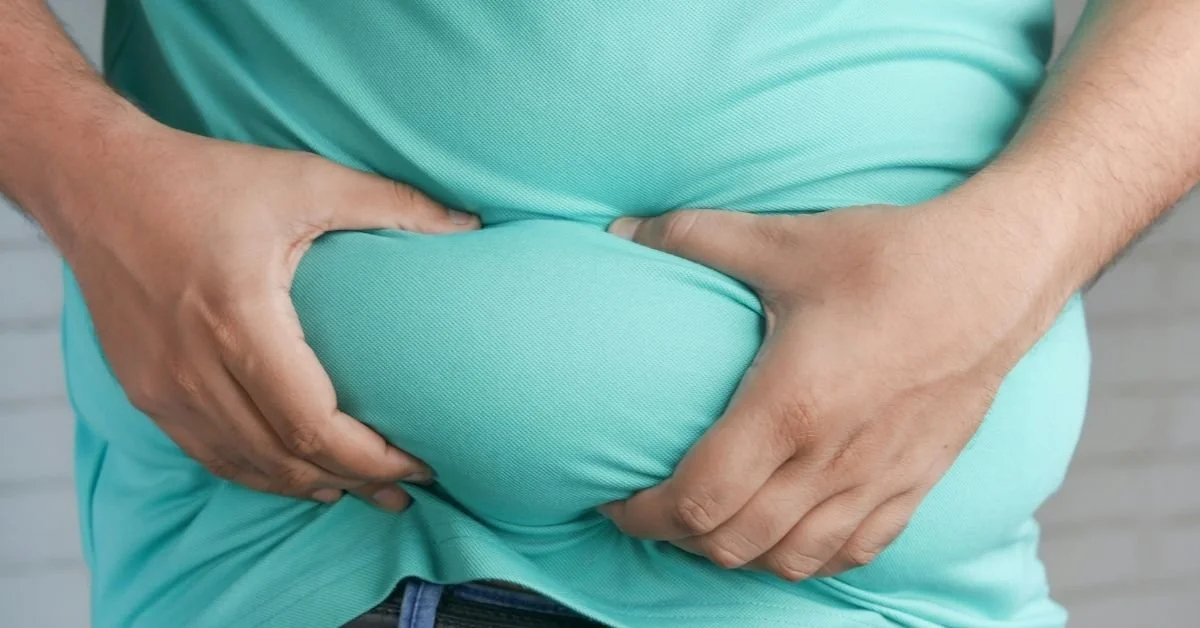
You've cut back. You're training. Your arms and legs look fine. So why is your belly still clinging on like it's paying rent?
If you're a man in your 30s, 40s or 50s, this probably sounds familiar. Another diet, another gym session, maybe skipping breakfast, and the waistband barely notices.
Here's what most people don't realise: belly fat isn't just about willpower or calories. It's tangled up with your blood sugar, insulin and testosterone, and together they can lock you into a cycle that's very hard to diet your way out of. Understand the loop, and you can start breaking it.
Contents
Why belly fat is different
The belly fat loop: insulin, blood sugar and testosterone
The tape-measure test
Could it be something else?
7 nutrition moves to break the loop
Stop guessing: see what's going on inside
Your questions, answered
Why belly fat is different
The fat you can pinch sits under the skin. But much of the fat around a man's middle is visceral fat, wrapped around your liver and organs. It's metabolically active, releasing inflammatory chemicals and hormones that affect how you handle sugar and make testosterone. That's why NICE links fat around the middle to type 2 diabetes, high blood pressure, heart disease and fatty liver.
The belly fat loop: insulin, blood sugar and testosterone
Think of it as a merry-go-round you didn't buy a ticket for.
Blood sugar spikes. Refined carbs, sugary drinks, beer and grazing keep it riding high.
Insulin works overtime. Over time your cells stop listening (insulin resistance), so you need even more. And high insulin tells your body to store fat, especially around the middle.
Belly fat lowers testosterone. Fat tissue contains aromatase, an enzyme that converts testosterone into oestrogen, and the inflammatory signals from excess fat dampen testosterone production too.
Lower testosterone makes belly fat easier to gain. It's harder to keep muscle and easier to store fat around your middle, which worsens insulin resistance.
And round it goes: researchers describe a self-perpetuating cycle (Fernandez et al., European Endocrinology). The hopeful bit? The same review found testosterone rises as weight comes off, in proportion to how much is lost, although smaller losses tend to give only a modest rise. Break the loop anywhere, and the rest starts to ease.
The tape-measure test
Grab a tape measure and some string. NICE recommends keeping your waist under half your height. So at 180cm (5ft 11in), you'd aim for a waist under 90cm (35in). Measure halfway between your lowest rib and the top of your hip bone, after breathing out naturally. Over that? It's worth paying attention.
Could it be something else?
Belly fat that won't shift can also be linked to poor sleep, chronic stress, alcohol, some medicines and thyroid problems. If you're exhausted but can't switch off, read Tired but Wired? Stress, Cortisol and Testosterone.
7 nutrition moves to break the loop
No crash diets. No cutting out entire food groups. Just smart, sustainable changes that work with your hormones.
Put protein first. A palm-sized portion at every meal (eggs, fish, chicken, Greek yoghurt, tofu, beans) keeps you full, softens blood sugar spikes and protects muscle.
Get carb-smart, not carb-scared. Swap white bread and pastries for oats, wholegrains, beans and lentils, and eat carbs after your protein and veg.
Load up on fibre. Veg, beans, nuts and seeds slow sugar absorption and help regulate appetite.
Watch the liquid calories. Beer, sugary coffees, juices and energy drinks are fast routes to a blood sugar spike.
Stop the grazing. Constant snacking keeps insulin switched on. Three balanced meals give it a break.
Move after meals. A 10 to 15 minute walk helps your muscles soak up blood sugar. Add strength training two or three times a week.
Protect your sleep. Short, broken sleep makes you hungrier, more insulin resistant and lower in testosterone.
Want to know which of these will make the biggest difference for you? Check your hormones and blood sugar with Well Man 360, or see your blood sugar in real time with the FIT Glucose Balance Programme.
Stop guessing: see what's going on inside
You can't see insulin resistance in the mirror. But you can measure it.
'I want the full picture.' Our Well Man 360 checks testosterone, free testosterone and SHBG alongside HbA1c (your average blood sugar), cholesterol, liver, thyroid and key nutrients from one morning blood sample, then we turn your results into a personalised plan. (Persistently low testosterone still needs confirming with your GP: see Low Testosterone in Men.)
'I want to see what my food is really doing.' The FIT Glucose Balance Programme gives you a continuous glucose monitor for 14 days, so you can see in real time what your breakfast, your pint or your post-dinner walk does to your blood sugar. Then we review your data together in a 60-minute results consultation. (If you have diabetes or take blood sugar medication, check with your GP first.)

Frequently Asked Questions
Can low testosterone cause belly fat? It can contribute. Low testosterone makes it easier to lose muscle and gain fat around the middle, and belly fat can lower testosterone in return. It's a two-way street.
Will losing belly fat raise my testosterone? Often, yes. Research shows testosterone tends to rise in proportion to the weight lost, especially with larger losses.
References:
NICE (2022). Keep the size of your waist to less than half of your height.
Fernandez, C.J., Chacko, E.C. and Pappachan, J.M. (2019). Male obesity-related secondary hypogonadism: pathophysiology, clinical implications and management. European Endocrinology, 15(2), 83-90.
This article is for general information only. If you're worried about your weight, blood sugar or hormones, speak to your GP.

Don’t forget to pin it.
Ready to finally shift it?
You've done the diets and the extra gym sessions. Let's find out what's actually going on.
Book a free 15-minute Personalised FIT Health Review with Becki for a direct, no-obligation conversation about where to start.

About Becki Hawkins
Becki Hawkins, BSc (Hons), mBANT, CNHC, is the founder of FIT Nutrition & Testing Clinic and a Registered Nutritional Therapist with over 20 years of experience. She specialises in evidence-based personalised nutrition and functional testing, helping clients uncover the root causes of digestive issues, hormonal imbalances, and unexplained symptoms. Becki combines clinical expertise with culinary creativity, translating complex test results into practical, delicious nutrition plans that work in real life. Her approach is simple: test, don't guess. Because guessing doesn't heal. Knowing does.