
Why Your Symptoms Get Worse Around Your Period
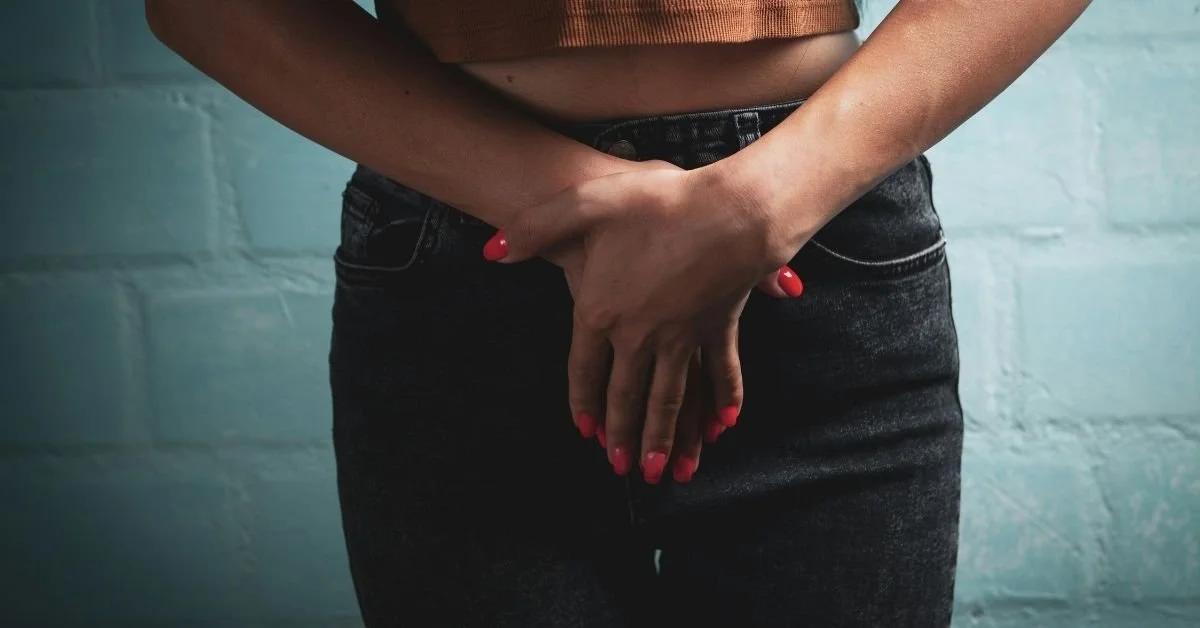
Same body. Same diet. So why does everything fall apart the week before your period?
Your jeans fit on Monday. By Thursday you look five months pregnant. The cheese board you loved last week now gives you a headache. Your skin's breaking out, your gut's in chaos and you could cry at an advert for car insurance.
You're not imagining it, and you're definitely not being dramatic.
Your hormones don't just run your cycle. They talk to your gut, your immune system, your skin and your brain. So when they shift each month, symptoms you already have can get noticeably louder. IBS, histamine reactions, migraines, eczema, even food sensitivities can all flare to the rhythm of your cycle.
The good news? Once you understand the pattern, you can work with it rather than against it.
Contents
The 30-second answer
Your cycle in a nutshell
Symptom by symptom: what's really going on
When it's more than 'just PMS'
Testing: getting to the root, not just riding it out
How to support your body through your cycle
Your questions, answered
The 30-second answer
In the week or two before your period, progesterone rises then drops, oestrogen dips, and your body releases prostaglandins to shed the womb lining. These shifts can slow or speed up your gut, make you more sensitive to pain, change how you handle histamine, and affect mood and sleep. So existing issues like IBS, food sensitivities, migraines and skin conditions often flare at the same point each month.
The key word is pattern. If it happens at the same time every cycle, your hormones are very likely part of the story.
Your cycle in a nutshell
Think of your cycle as a monthly playlist. Each phase has its own hormone headliner, and each one changes how you feel.
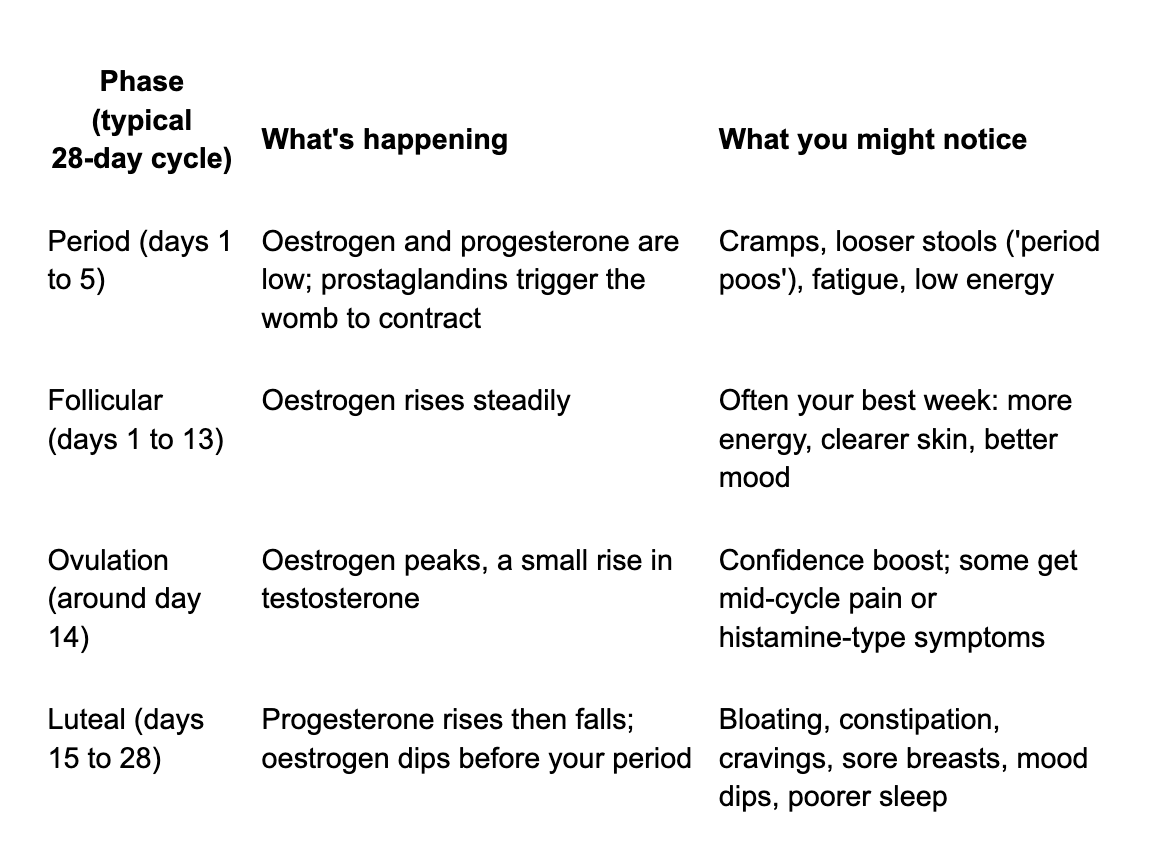
Everyone's cycle is different, and many aren't 28 days. That's why tracking your pattern matters more than any textbook chart.
Does this mean your hormones are 'out of balance'? Not necessarily. Often it isn't that your hormones are wrong, but that your body is extra sensitive to their normal monthly ups and downs. But if symptoms are intense, your cycle is irregular or something just feels off, testing can show whether there's more going on.
Symptom by symptom: what's really going on
Bloating, constipation and 'period poos'. Progesterone relaxes smooth muscle, including your gut, so things slow down in the second half of your cycle. Cue bloating and constipation. Then, as your period starts, prostaglandins make the womb contract, and some spill over to the bowel too, speeding things up. Hello, period poos. If you have IBS, research suggests your gut can also be more sensitive around your period, so the same meal can feel very different from one week to the next (Canadian Digestive Health Foundation).
Pre-period bloating isn't only about your gut, either. Fluid retention plays a part too, which is why cutting out yet another food isn't always the answer.
Food reactions that come and go. Ever wondered why a food you're fine with most of the month suddenly causes trouble before your period? A gut that's slower and more sensitive simply has less wiggle room. Foods you're mildly sensitive to can tip you over the edge at this point in your cycle. That's why cyclical symptoms can hide a food intolerance, and why a food diary that ignores your cycle can send you round in circles. (New to this? Start with Food Intolerance vs Food Allergy.)
Before you blame the poor sandwich, ask yourself:
Does this happen all month, or mainly before my period?
Does the same food cause symptoms every time?
Does portion size make a difference?
What's happening with my sleep, stress and bowel habits at the same time?
Histamine: the hormone connection nobody mentions. Research suggests oestrogen and histamine have a close two-way relationship: oestrogen can encourage mast cells to release histamine, and histamine can nudge oestrogen production. If you're already prone to histamine overload, the hormonal peaks of your cycle may make flushing, headaches, a stuffy nose, hives or itchy skin worse at ovulation or just before your period. Find out more in Histamine Intolerance or MCAS?
Headaches and migraines. The sharp drop in oestrogen just before a period is a well-known migraine trigger. Many people notice headaches in the two days before and the first few days of bleeding.
Skin flare-ups. As oestrogen falls, the relative effect of androgens such as testosterone can increase, which may mean more oil and those classic chin breakouts. Eczema can flare too, especially if histamine or gut health is part of the picture (Is Your Skin Reacting to Your Gut?).
Mood, cravings, sleep and energy. Falling hormones affect brain chemicals like serotonin, so low mood, irritability, anxiety and those must-eat-chocolate-now cravings are all very real. Poorer sleep adds fuel to the fire, leaving you tired and running on sugar and caffeine.
When it's more than 'just PMS'
Cycle-related symptoms are common, but 'common' doesn't mean you have to put up with them. See your GP if:
Your periods are very painful, heavy or irregular, pain stops you doing normal things, or you have pain during sex or painful bowel movements (conditions like endometriosis, adenomyosis or PCOS can mimic or worsen gut symptoms)
You bleed between periods or after sex
You have bowel symptoms that don't follow your cycle, unexplained weight loss or blood in your poo
Your mood dips are severe, last for days and affect your relationships or work
Endometriosis can affect the bowel (NHS), so cycle-related gut symptoms shouldn't automatically be labelled IBS or food intolerance.
That last one could be PMDD (premenstrual dysphoric disorder), a more severe form of PMS that can be treated (NHS). If you ever feel hopeless or have thoughts of harming yourself, please reach out: call Samaritans free on 116 123, or call 999 in an emergency.
Testing: getting to the root, not just riding it out
Tracking your symptoms tells you when. Testing helps you understand why. At FIT, these are the two I find most useful for cycle-related flare-ups, especially used together.
Female hormone testing. Our FIT Female Hormone Balance Test looks at key hormones that shape your cycle, so we can see whether an imbalance might be amplifying your symptoms. Want the full picture, from hormones to wider health biomarkers? Our Well Woman 360 Complete Hormone & Biomarker Assessment is our most comprehensive option. Timing matters: results depend on where you are in your cycle, and hormonal contraception changes how they're read. For example, progesterone is usually tested about seven days before your next expected period, not automatically on day 21. We'll guide you on the right timing for you.
Food intolerance testing. If certain foods seem to bite back harder before your period, our Advanced Food Intolerance Assessment uses IgG testing to give you a personalised starting point. Rather than cutting everything out in a pre-period panic, we focus on the foods that matter for you, then confirm with a structured elimination and reintroduction. (Curious how it compares to allergy tests? Read IgG vs IgE Testing.)
Every test includes a personalised nutrition consultation, so you're never left alone with a results PDF. See all our tests
How to support your body through your cycle
Track it for two to three cycles. Note symptoms, food, sleep, stress and cycle day. Apps are fine; a notes page works too. Patterns jump out fast, and your GP or practitioner will love you for it.
Eat for a happier gut in the luteal phase. Fibre from veg, oats, beans and seeds, plenty of water, and gentle movement help keep things moving when progesterone slows you down. Build fibre up gradually, though: suddenly piling on beans and bran can make bloating worse.
Steady your blood sugar. Pair carbs with protein and healthy fats, and eat regular meals. It's your best defence against the 4pm biscuit raid. If big meals leave you uncomfortable, go smaller and more often, and resist cutting out several food groups in one bad week.
Go easy on histamine before your period if you're prone to flushing or headaches: aged cheese, wine, cured meats and leftovers are the usual suspects.
Mind the magnesium. Leafy greens, nuts, seeds and wholegrains are rich sources. The NHS notes there's limited evidence for supplements like magnesium, B6 and calcium for PMS, so check with your GP or pharmacist first.
Protect your sleep and stress levels. Both make symptoms louder. Even 10 minutes of walking, stretching or breathing helps.
Know when to test. If symptoms keep coming back, hormone and food intolerance testing can show you what's driving them.
Frequently Asked Questions
Why is my IBS worse before my period? Hormone shifts change how fast your gut moves and how sensitive it is. Progesterone tends to slow things down (bloating, constipation), while prostaglandins at the start of your period can speed things up (cramps, loose stools).
Why do I get diarrhoea on my period? Prostaglandins, the chemicals that help your womb contract, can affect your bowel too. Repeated severe diarrhoea, blood in your stools or symptoms outside your usual pattern need a GP check.
Can food intolerances get worse at certain times of the month? Many people notice that foods they usually tolerate cause more trouble before their period, when the gut is more sensitive. Tracking your cycle alongside a food diary, or food intolerance testing, can help you spot the pattern.
Can a hormone blood test diagnose PMS? No single blood test diagnoses PMS; a symptom diary over at least two cycles is key. Hormone testing is useful for exploring what else might be amplifying your symptoms, especially if your cycle is irregular or something has changed.
Do I need both hormone and food intolerance testing? Not always. It depends on your symptoms, cycle and history. If your flare-ups involve both your gut and your hormones, using both together often gives the clearest picture, and we can help you decide.
Is this perimenopause? If you're in your 40s and your cycle, sleep or mood are changing in new ways, it could be. Read Burnout or Perimenopause? to compare the signs.
References:
NHS. Premenstrual syndrome (PMS) (includes PMDD and treatment).
NHS. Endometriosis.
Canadian Digestive Health Foundation. Your gender identity and biological sex can affect your gastrointestinal ailments.
This article is for general information and doesn't replace medical advice. See your GP if your periods are very painful, heavy or irregular, or if you have persistent bowel changes, unexplained weight loss or blood in your stools.
Don’t forget to pin it.
Ready to stop dreading that week?
You don't have to just grit your teeth and wait for it to pass. Together we can find what's driving your symptoms and build a plan that works with your cycle, not against it.
Take the free Find Your FIT Quiz to discover which test or programme suits your symptoms, or book a free 15-minute Personalised FIT Health Review with Becki for a direct, no-obligation conversation about where to start.

About Becki Hawkins
Becki Hawkins, BSc (Hons), mBANT, CNHC, is the founder of FIT Nutrition & Testing Clinic and a Registered Nutritional Therapist with over 20 years of experience. She specialises in evidence-based personalised nutrition and functional testing, helping clients uncover the root causes of digestive issues, hormonal imbalances, and unexplained symptoms. Becki combines clinical expertise with culinary creativity, translating complex test results into practical, delicious nutrition plans that work in real life. Her approach is simple: test, don't guess. Because guessing doesn't heal. Knowing does.