
Menopause: Why Your Gut Health & Microbiome Matter More Than Ever

Understanding the gut-hormone connection, and what actually helps
If you're navigating perimenopause or menopause and thinking, "why does my body suddenly feel like a stranger?", you are not imagining it.
Bloating that never used to happen. New food reactions. Unpredictable bowels. Brain fog. Weight gain around the middle. Increased anxiety. Poor sleep. As a Registered Nutritional Therapist with 20 years of clinical experience, Becki can tell you this with confidence: your gut health and your hormones are deeply interconnected, and during menopause, that connection becomes critical.
Contents
The gut-hormone connection: what's actually happening
The estrobolome: your oestrogen recycling system
Slower gut motility and increased bloating
Gut barrier and inflammation
Why weight gain becomes 'stubborn'
Simple, evidence-based dietary strategies
When to consider functional testing
FAQs
The gut-hormone connection: what's actually happening
During perimenopause and menopause, levels of oestrogen and progesterone fluctuate and eventually decline. Hormones don't just affect your reproductive system; they influence gut motility, inflammation levels, immune regulation, blood sugar control and the composition of your gut microbiome.
The estrobolome: your oestrogen recycling system
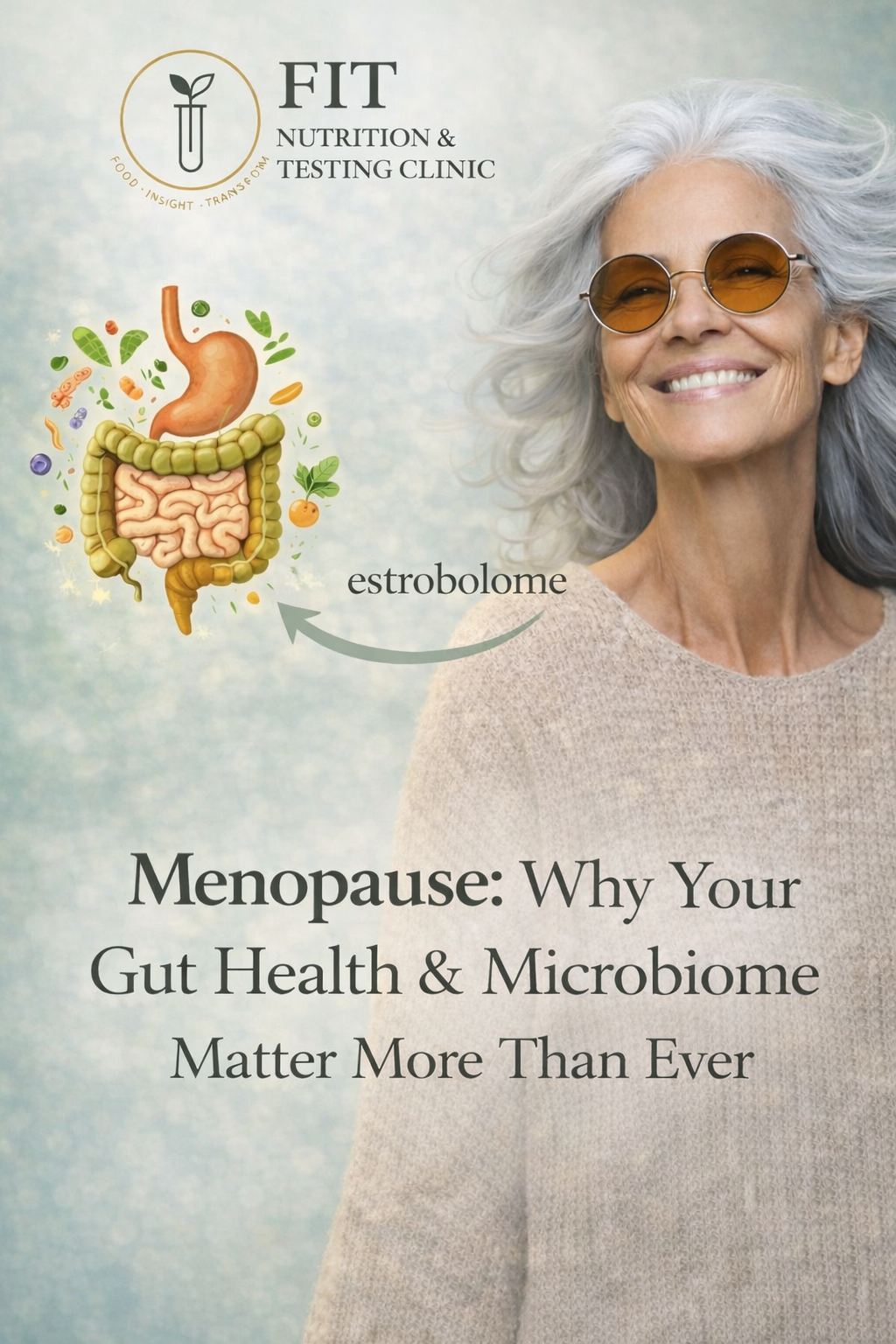
Within your gut microbiome lives a collection of bacteria known as the estrobolome. These microbes produce an enzyme, beta-glucuronidase, that helps metabolise and regulate circulating oestrogen, a mechanism now well established in the research literature (Baker et al., Maturitas; Chen et al., Frontiers in Endocrinology, 2026).
When the microbiome is diverse and balanced, it supports healthy oestrogen recycling. When it's disrupted, a state researchers call dysbiosis, we may see poorer oestrogen clearance, oestrogen dominance symptoms, increased inflammation, and worsening hot flushes or mood swings. As oestrogen naturally declines through menopause, a compromised microbiome can amplify symptoms rather than buffer them.
Slower gut motility and increased bloating
Lower progesterone and oestrogen levels can slow digestive transit, which means more constipation, more fermentation in the colon, greater bloating and wind, and heightened sensitivity to foods.
Many women assume they've suddenly developed multiple intolerances. Sometimes that's true, but often it's impaired digestion and microbial imbalance driving symptoms rather than a new intolerance altogether. If bloating after meals is a familiar pattern, our guide to digestive enzymes explained covers the habits worth trying first.
Gut barrier and inflammation
Oestrogen has anti-inflammatory and gut-barrier protective effects. As levels fall, gut permeability may increase (sometimes referred to as 'leaky gut'), immune reactivity may heighten, adverse food reactions can become more noticeable, and joint pain and systemic inflammation may rise.
This is why gut-focused support during menopause isn't just about digestion; it's about whole-body resilience.
Why weight gain becomes 'stubborn'
The menopausal shift toward lower oestrogen also affects insulin sensitivity, visceral fat storage, muscle mass and microbiome diversity. Research into the gut microbiome's role in menopause-related metabolic changes has found that reduced diversity is associated with adverse cardiometabolic outcomes, including a tendency toward increased abdominal fat storage (Ziegler et al., Study of Latinos, PMC9239235; Ervin et al., PMC8268108).
This is not a willpower issue. It's physiology, and it's addressable.
Simple, evidence-based dietary strategies
The good news is that the gut responds well to dietary change.
Prioritise fibre. Fibre feeds beneficial gut bacteria, supports oestrogen clearance and improves blood sugar balance. Most people fall well short: recent UK National Diet and Nutrition Survey data shows only around 4% of adults meet the 30g daily fibre target (Food Foundation, 2025). Flaxseed, lentils, beans, oats, berries, leafy greens and chia seeds are good places to build from.
Include polyphenol-rich foods. Extra virgin olive oil, green tea, dark chocolate (85%+), pomegranate and red onions nourish beneficial bacteria and support the body's antioxidant defences.
Get enough omega-3 fats. Oily fish such as salmon, mackerel and sardines, along with walnuts and ground flaxseed, support inflammation control.
Don't underestimate protein. Muscle mass naturally declines during menopause as anabolic hormone levels fall. Research on postmenopausal protein needs suggests aiming above the standard RDA, broadly in the range of 1.0 to 1.6g per kilogram of body weight daily depending on activity level, to better support muscle mass and metabolic health (Deer & Volpi, 2015; Dietary Protein Requirement Threshold review, PMC8471109).
When to consider functional testing
If symptoms feel complex, persistent or confusing, guessing at solutions rarely gets you very far. Strategic functional testing can provide real clarity and direction rather than another round of trial and error.
Menopause and hormone testing. Comprehensive hormone panels can assess oestradiol, progesterone, testosterone, DHEA and cortisol rhythm, helping to understand whether symptoms are being driven by low hormones, imbalances, or stress-axis dysfunction. Our Hormonal Assessment is designed for exactly this.
Gut microbiome testing. Advanced stool analysis can evaluate microbial diversity, inflammatory markers, digestive function and beta-glucuronidase activity linked to oestrogen recycling. This is particularly useful if you're experiencing bloating, IBS-type symptoms, skin changes or unexplained inflammation. Our Gut Microbiome Assessment covers this.
Food intolerance testing. When immune-mediated food reactions are suspected, identifying specific triggers can reduce inflammation load while gut repair work continues, rather than eliminating multiple foods indefinitely on a guess. Our Advanced Food Intolerance Assessment can help identify these.
The bigger picture
Menopause is not a decline; it's a metabolic transition. With the right nutritional strategy, gut support and targeted testing where appropriate, this phase can become one of strength and clarity rather than confusion and frustration.
Don’t forget to pin it
FAQs
Is bloating during menopause normal? It's common, and there's a physiological explanation for it: declining progesterone and oestrogen can slow gut motility and increase gas and bloating. Common doesn't mean it has to be permanent or ignored, particularly if it's new, severe, or accompanied by other symptoms worth discussing with your GP.
Can improving gut health actually help menopause symptoms? There's a growing body of research on the estrobolome and its role in oestrogen regulation, which suggests gut health and hormone balance are more connected than previously understood. It isn't a cure-all, but supporting gut diversity through diet is a genuinely evidence-based place to start.
Do I need testing, or can diet alone help? Diet and lifestyle changes make a real difference for many women and are always worth trying first. Testing becomes useful when symptoms are persistent, severe, or unclear enough that guessing at the cause risks wasting time on the wrong approach.
Is weight gain during menopause inevitable? Hormonal shifts do make weight management more challenging, largely through changes to insulin sensitivity, muscle mass and fat distribution. It isn't inevitable or a matter of willpower, though it often does require adjusting your approach to nutrition and movement compared to what worked before.
Sources:
Baker, J.M. et al. Estrogen-gut microbiome axis: Physiological and clinical implications. Maturitas. Source
Chen, X. et al. (2026). The impact of estrogen status on the gut microbiome: a systematic review and meta-analysis. Frontiers in Endocrinology. Source
Gut-Brain Communication in Menopause: Insights into Neuroendocrine and Microbiome Interactions. PubMed
Ziegler, A.M. et al. Menopause Is Associated with an Altered Gut Microbiome and Estrobolome. PMC
How the Gut Microbiome Links to Menopause and Obesity. PMC
Food Foundation (2025). UK still failing to meet basic dietary guidelines (NDNS data). Source
Dietary Protein Requirement Threshold and Micronutrients Profile in Healthy Older Women. PMC
Ready to understand what your body's been trying to tell you? Take the quiz or book your FREE health review.

About Becki Hawkins
Becki Hawkins, BSc (Hons), mBANT, CNHC, is the founder of FIT Nutrition & Testing Clinic and a Registered Nutritional Therapist with over 20 years of experience. She specialises in evidence-based personalised nutrition and functional testing, helping clients uncover the root causes of digestive issues, hormonal imbalances, and unexplained symptoms. Becki combines clinical expertise with culinary creativity, translating complex test results into practical, delicious nutrition plans that work in real life. Her approach is simple: test, don't guess. Because guessing doesn't heal. Knowing does.