
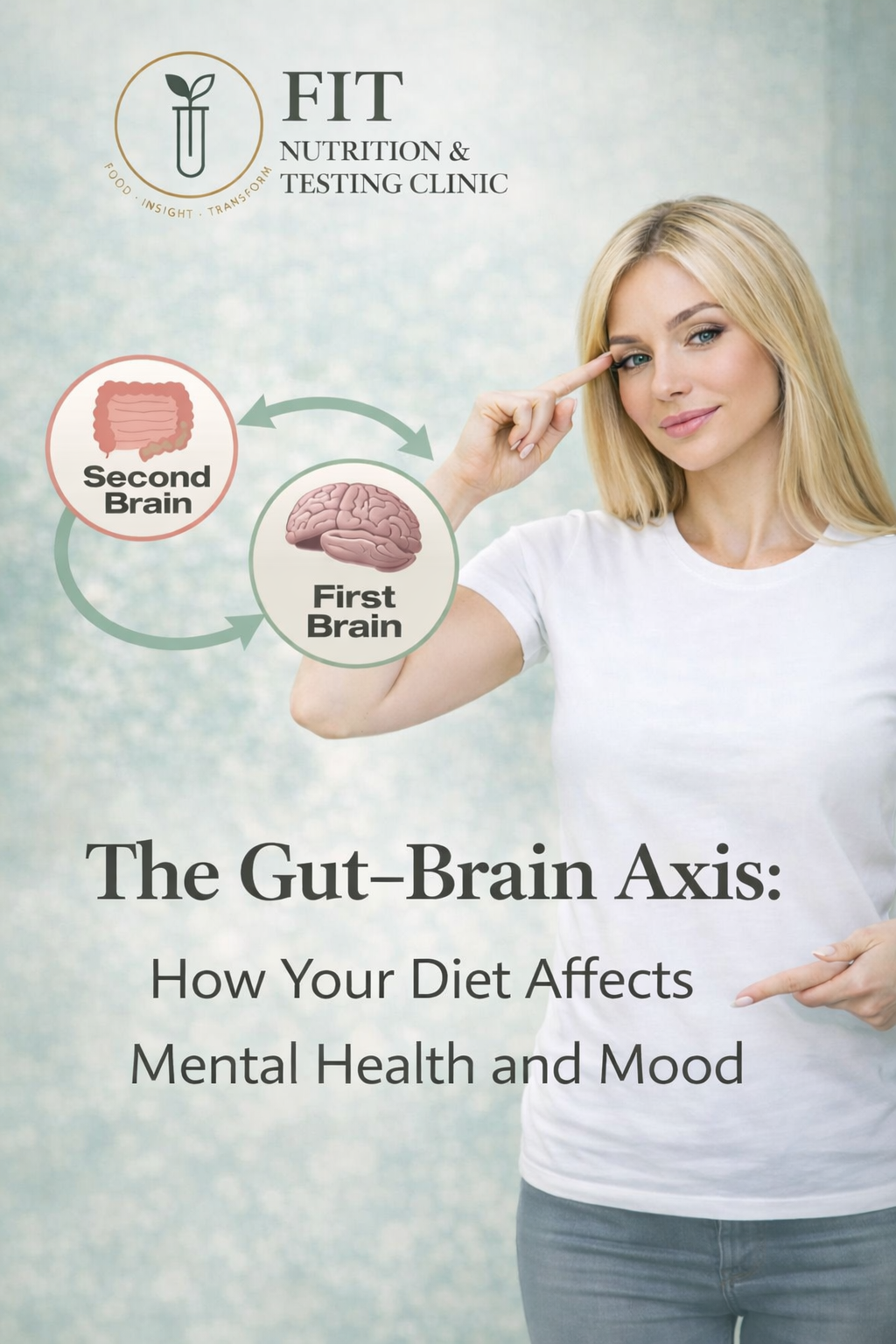
The Gut-Brain Axis: How your Diet affects Mental Health and Mood.

Why anxiety, brain fog and low mood are so often connected to what's happening in your gut.
“Becki… I’m not ill. I’m just exhausted, anxious, bloated, foggy and not myself anymore.”
Sound familiar? If you've been dealing with low mood, anxiety, digestive issues, cravings, fatigue or brain fog, you are not weak, broken or 'just getting older.' Very often, your gut is quietly running the show, and when your gut isn't happy, neither is your brain.
Welcome to the powerful, and often misunderstood, world of the gut-brain axis.
Contents
What is the gut-brain axis
When 'trust your gut' stops working
Why guessing with diets rarely fixes the problem
Calm the gut, lift the mood: key nutrients to focus on
What the research shows about food and mood
Your nervous system matters just as much as your diet
FAQs
What is the gut-brain axis
Your gut and brain are in constant two-way communication, through the vagus nerve, hormones, immune signals and gut bacteria. This system is called the gut-brain axis, and it plays a role in anxiety, low mood, stress resilience, focus, motivation, sleep and energy.
Here's a detail worth understanding properly, because it's often oversimplified: around 90% of the body's serotonin is produced in the gut. What that doesn't mean is that gut serotonin travels up to your brain and lifts your mood directly, it can't cross the blood-brain barrier, so gut and brain serotonin are largely separate pools. What it does mean is that gut serotonin plays a central role in digestion, and the process behind it, involving gut bacteria, the vagus nerve, immune signalling and the stress-hormone system, genuinely does influence brain function and mood (Martin et al., 2017, reviewed in Frontiers, PMID 32479926).
In short, gut inflammation and imbalance don't hijack your brain's serotonin supply directly, but they do disrupt several of the pathways your brain relies on for steady mood and energy. The end result for how you feel is much the same.
When 'trust your gut' stops working
Many clients come to FIT saying they feel on edge all the time, that their digestion is unpredictable, their mood crashes for no reason, they're tired even after sleeping, or that coffee is the only thing keeping them going.
Behind the scenes, this often traces back to food reactions, gut inflammation, poor microbiome diversity, stress overload, nutrient depletion or nervous system burnout. When this builds up, the body can stay in a low-level state of alert, which affects serotonin production, stress hormones, blood sugar, sleep quality and energy metabolism. The result is feeling anxious, flat, overwhelmed and disconnected from how you used to feel.
Why guessing with diets rarely fixes the problem
Cutting gluten, then dairy, then sugar, then carbs, then everything, and still feeling unwell, is a familiar story for a lot of people. Random restriction rarely heals the gut on its own.
That's why, at FIT, the focus is on testing before guessing, using YorkTest's gold-standard food intolerance testing to help identify foods that may be quietly triggering immune reactions and inflammation. It's worth being upfront here: IgG food intolerance testing is a genuinely debated area within the wider allergy and immunology field, some professional bodies have raised concerns that IgG antibodies reflect food exposure rather than intolerance on their own. In practice, food-specific IgG results work best as one part of a fuller personalised picture, alongside symptom history and a structured elimination and reintroduction process, rather than as a standalone answer. When the right foods (not all foods) are removed this way, clients often notice inflammation reducing, the gut lining repairing, microbes rebalancing, and energy and mood improving.
If gut inflammation or poor microbiome diversity sounds familiar, ourGut Microbiome Assessment and Advanced Food Intolerance Assessmentare both designed to bring some clarity rather than more guesswork.
Calm the gut, lift the mood: key nutrients to focus on
Once trigger foods are identified and removed, the next step is rebuilding, not staying in avoidance mode indefinitely. Some of the key gut-brain nutrients worth focusing on:
Omega-3 fatty acids. Found in anchovies, sardines, mackerel, chia, flax and walnuts. Support brain health and help reduce inflammation linked to anxiety and IBS.
Magnesium. Found in pumpkin seeds, almonds, spinach and dark chocolate. Plays a role in relaxation and nervous system balance.
B vitamins (B6, B9, B12). Found in salmon, eggs, lentils, chickpeas and nutritional yeast. Needed for serotonin and dopamine production.
Zinc and iron. Found in beef, pumpkin seeds, tofu, liver, mussels and spinach. Support energy, focus and motivation.
Tryptophan-rich foods. Found in turkey, tuna, oats, eggs and cottage cheese. Provide raw material for serotonin production.
Prebiotics and polyphenols. Found in garlic, onions, berries, olive oil, cocoa and green tea. Feed the beneficial gut bacteria linked to emotional resilience.
This is where nutrition becomes genuinely therapeutic, not just 'healthy eating.'
What the research shows about food and mood
One of the most important studies in nutritional psychiatry, the SMILES trial, found that a modified Mediterranean-style diet led to significantly greater improvement in depression symptoms compared with a social support control group, over 12 weeks (Jacka et al., 2017, BMC Medicine). No calorie counting, no extreme restriction, just whole foods, olive oil, fish, vegetables, legumes, nuts, fibre and colour.
In clinic, this pattern shows up constantly: when clients eat for gut health, mood tends to follow.
Your nervous system matters just as much as your diet
Your gut listens to your stress levels. Being constantly busy, rushed, overloaded and 'always on' takes a real toll on digestion. Part of the work at FIT involves calming the vagus nerve, the body's 'rest and repair' switch, through simple tools such as slow breathing (four to six breaths per minute), gentle yoga or meditation, a cool shower finish, singing or humming, daily walking, and mindful eating. Small habits, genuinely meaningful biological impact.
When personalised testing, guided elimination, gut repair nutrition, mood-support nutrients, stress regulation and supported reintroduction are combined, the change isn't limited to digestion. Clients often notice a shift in energy, confidence, focus, emotional stability and their overall relationship with food.
Frequently Asked Questions
How does gut health affect mental health? Your gut communicates with your brain via nerves, immune pathways and hormonal signals, and gut bacteria influence the production of key neurotransmitters. Imbalances in this system can contribute to anxiety, low mood and fatigue.
Can food intolerances affect mood? Immune reactions to specific foods can increase inflammation and disrupt gut bacteria, which in turn can influence the pathways involved in stress and mood regulation.
What is the gut-brain axis? It's the two-way communication system linking your digestive system, nervous system and immune system, running largely via the vagus nerve.
Can improving gut health reduce anxiety? Research suggests that improving microbiome balance, reducing inflammation and supporting vagal tone may help regulate the body's stress response, though it's rarely the only factor involved.
How long does it take to feel a difference? This varies by person, but many clients notice meaningful improvements within 4 to 12 weeks of a personalised, testing-led approach.
Sources:
Martin, C.R. et al. The Brain-Gut-Microbiome Axis. Cellular and Molecular Gastroenterology and Hepatology / review discussed in PubMed, PMID 32479926
Jacka, F.N. et al. (2017). A randomised controlled trial of dietary improvement for adults with major depression (the 'SMILES' trial). BMC Medicine, 15, 23. DOI
Don’t forget to pin it
Ready to Calm Your Gut & Lift Your Mood?
If you’re struggling with digestion, mood, anxiety, fatigue or brain fog — and you’re tired of guessing — I’d love to support you.
Take the quiz or book your FREE health review.

About Becki Hawkins
Becki Hawkins, BSc (Hons), mBANT, CNHC, is the founder of FIT Nutrition & Testing Clinic and a Registered Nutritional Therapist with over 20 years of experience. She specialises in evidence-based personalised nutrition and functional testing, helping clients uncover the root causes of digestive issues, hormonal imbalances, and unexplained symptoms. Becki combines clinical expertise with culinary creativity, translating complex test results into practical, delicious nutrition plans that work in real life. Her approach is simple: test, don't guess. Because guessing doesn't heal. Knowing does.