
Could you have a ‘gut leak’ or ‘leaky gut’?
Leaky gut and IgG food intolerance: cracking the code to better health
A quick disclaimer first: 'gut leak', 'leaky intestine', 'leaky stomach' and the various search terms we're apparently asking Dr Google or our smart speakers about do not need to cause panic, and they're certainly not as graphic as they sound.
However, as a possible missing piece of the puzzle behind food intolerance, inflammation and conditions such as IBS and migraine, if those gory-sounding taglines have got your attention, it's worth reading on.
Interest in, awareness of, and suspected prevalence of food intolerance is rising, with somewhere between 20% and 60% of the population potentially having uncovered food intolerances or sensitivities responsible for irritating and unexplained symptoms like bloating, IBS, low mood, migraine, acne and eczema (1, 2).
Contents
What is a 'leaky gut' and how may it be affecting you
What about symptoms that aren't gut related
What causes a leaky gut
Is leaky gut linked to the gut microbiome
Can a leaky gut be repaired
FAQs
What is a 'leaky gut' and how may it be affecting you
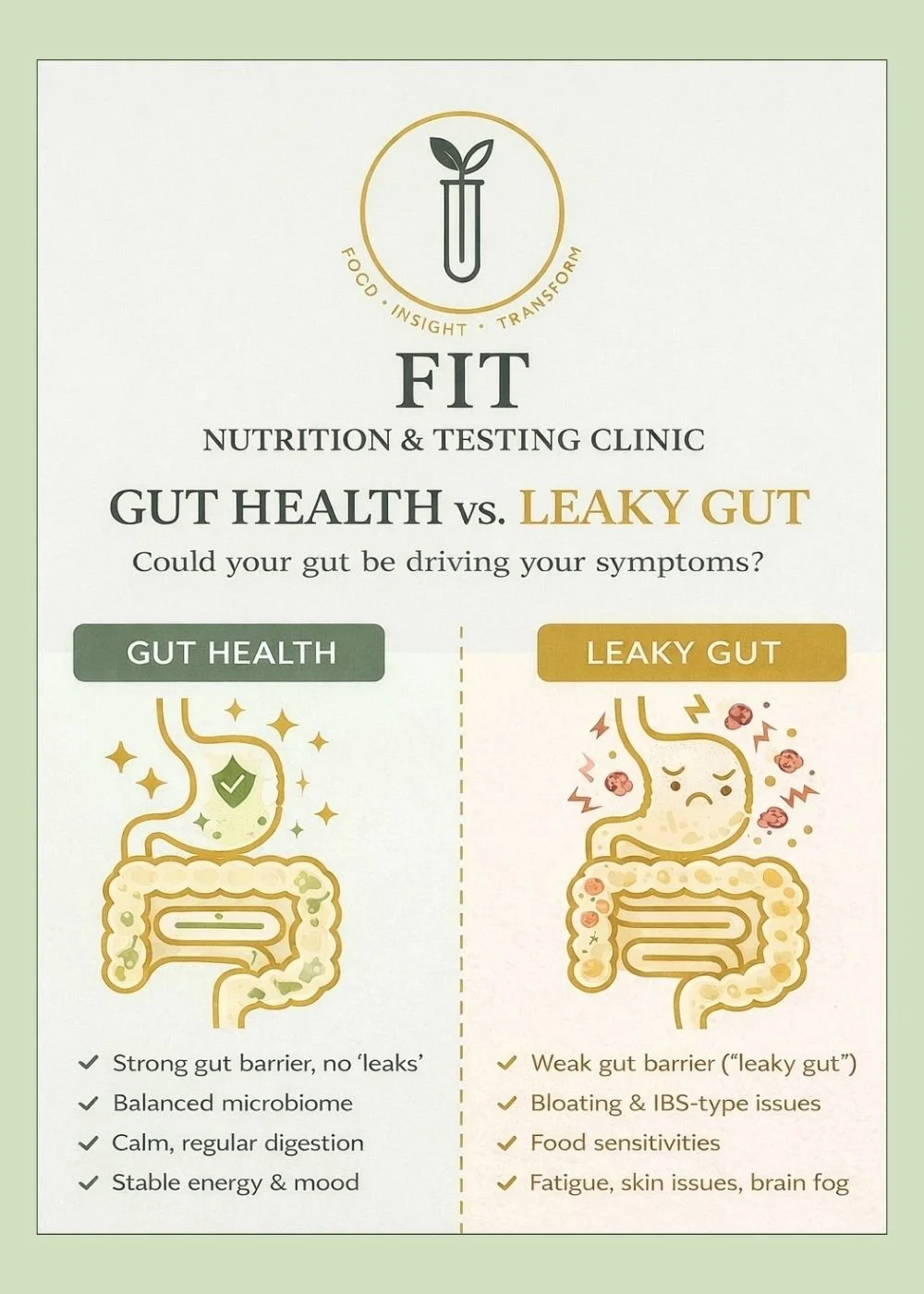
Within the digestive system, the cell structures responsible for regulating what passes from the intestine into the bloodstream are known as tight junctions. Think of them like doormen deciding who to let into a nightclub, hoping to avoid any trouble. Natural microscopic gaps in the gut lining allow nutrients and beneficial compounds through into the bloodstream, but there's a limit to how large those gaps should be, keeping harmful substances such as toxins, microbes, undigested food particles and antibodies out. Letting these 'troublemakers' into the bloodstream can trigger widespread inflammation, immune responses and disruption to health (3).
Compromised intestinal permeability, or sub-optimal integrity of the mucosal epithelial barrier (the technical name for 'leaky gut syndrome'), is when those microscopic gaps become too large.
When a leaky gut is present, it opens the possibility for normally 'harmless' food proteins to be absorbed from the intestine into the bloodstream. The immune system may then incorrectly recognise these food proteins as harmful and mount an immune response against them. Repeated exposure to these foods may lead to recurrent upregulation of IgG antibody production, as measured in our Advanced Food Intolerance Assessment. IgG production can trigger a cascade of inflammation and cellular changes that may be linked to the symptoms experienced by those with food intolerance. Digestive system dysfunction and disease often coincide with increased detection of IgG antibodies stemming from food antigen ingestion.
It's worth being clear that IgG-based food intolerance testing remains a debated area within the wider allergy field, some allergy bodies have raised concerns that IgG levels primarily reflect food exposure rather than proven intolerance. The evidence base referenced throughout this article, particularly the IBS and migraine trials, is genuinely part of that ongoing conversation, and results are best used alongside symptom history and a structured elimination and reintroduction process rather than in isolation.
As you may have experienced, food intolerance symptoms aren't always straightforward. You can eat a meal at your favourite restaurant one week and be fine, then have the same thing a few weeks later and find your IBS flares up badly. It's thought that selectivity of response to certain food intolerances may come down to the type and quantity of food consumed, and the impact of a leaky gut on digestion and absorption (4).
Unlike food allergies, which involve IgE antibodies and can cause immediate, severe reactions, food intolerance typically involves different pathways and antibodies (IgG) and results in delayed responses. Symptoms can range from gastrointestinal discomfort to headaches and fatigue, which makes the offending food harder to pinpoint (5).
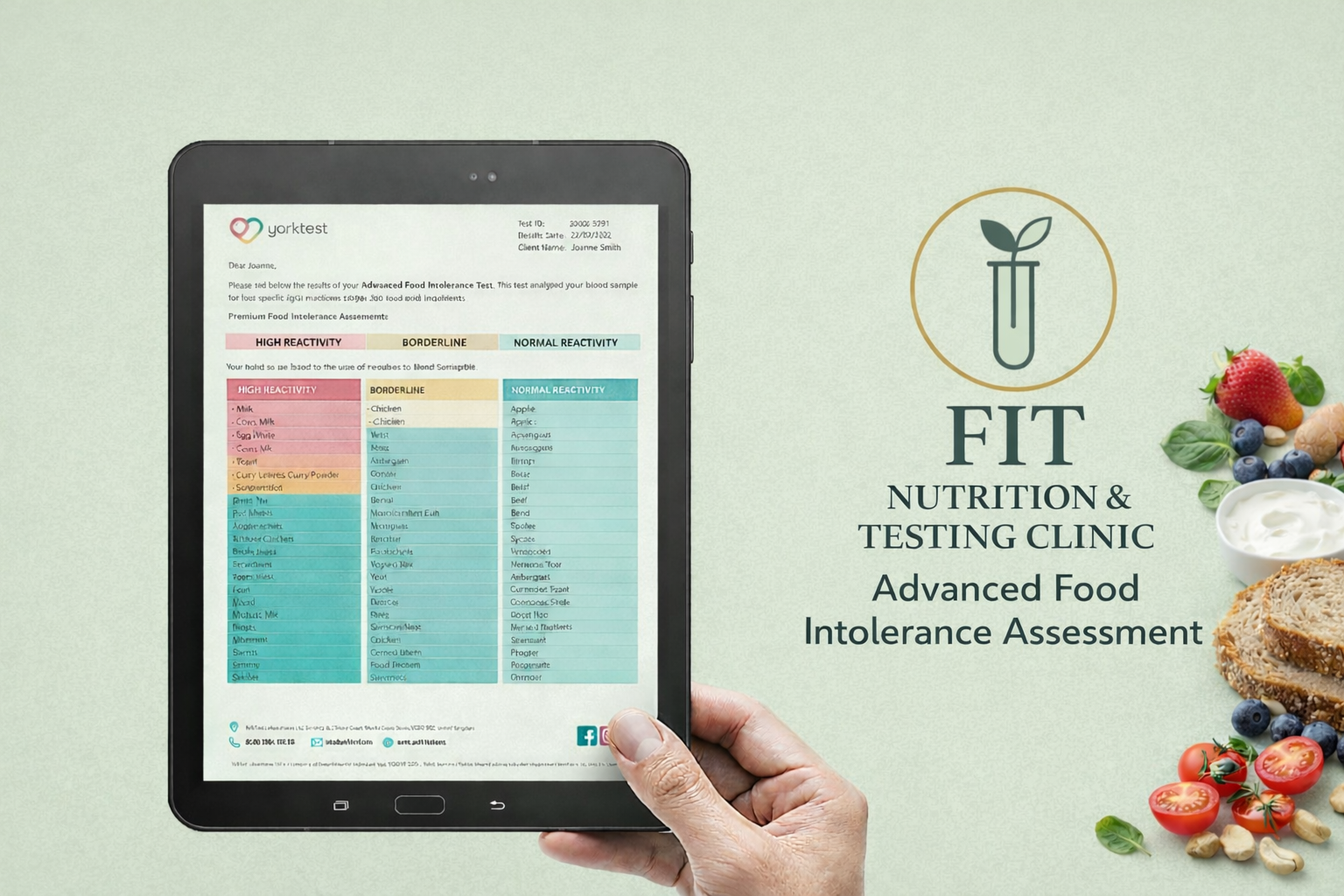
FIT's Advanced Food Intolerance Assessment, using UK-leading lab partner YorkTest's gold-standard testing, enables identification of IgG food reactions. With the expert support of a fully qualified Nutritional Therapist, this builds toward an optimal dietary regime, often including a temporary reduction or elimination of 'suspect' foods. Research suggests the optimal period for an initial elimination protocol based on IgG food intolerance testing is around 12 weeks (6). A diet based on food-specific IgG test results has shown promise as a safe and effective approach for patients with chronic conditions such as IBS and migraine (7, 8).
At FIT, results are never handed over in isolation, they're carefully interpreted, personalised and translated into clear, practical action that fits real life.
What about symptoms that aren't gut related
IgG antibodies and elements of the food proteins detected as harmful form immune complexes. These complexes circulate around the body via the blood vessels, and can settle in organs away from the digestive system. This may be part of how inflammatory symptoms associated with food intolerance can show up beyond the digestive system, in systems such as the skin, urinary tract, joints or brain (3, 8).
What causes a leaky gut?
Often complex, and rarely down to a single cause, theories on leaky gut development range from infection, toxins and trauma to certain foods, medications and environmental chemicals. Genetics may play a part, our increasingly sterile modern environments could be linked (the hygiene hypothesis), and natural ageing can weaken gut barrier wall cells, lower stomach acid secretion and shift the balance of the gut microbiome (10).
Is leaky gut linked to the gut microbiome
Yes. An imbalance between the 'good' and 'bad' microbes within the gut, known as dysbiosis, can influence the permeability of the gut lining and affect the immune system, digestive health and even mental health (11).
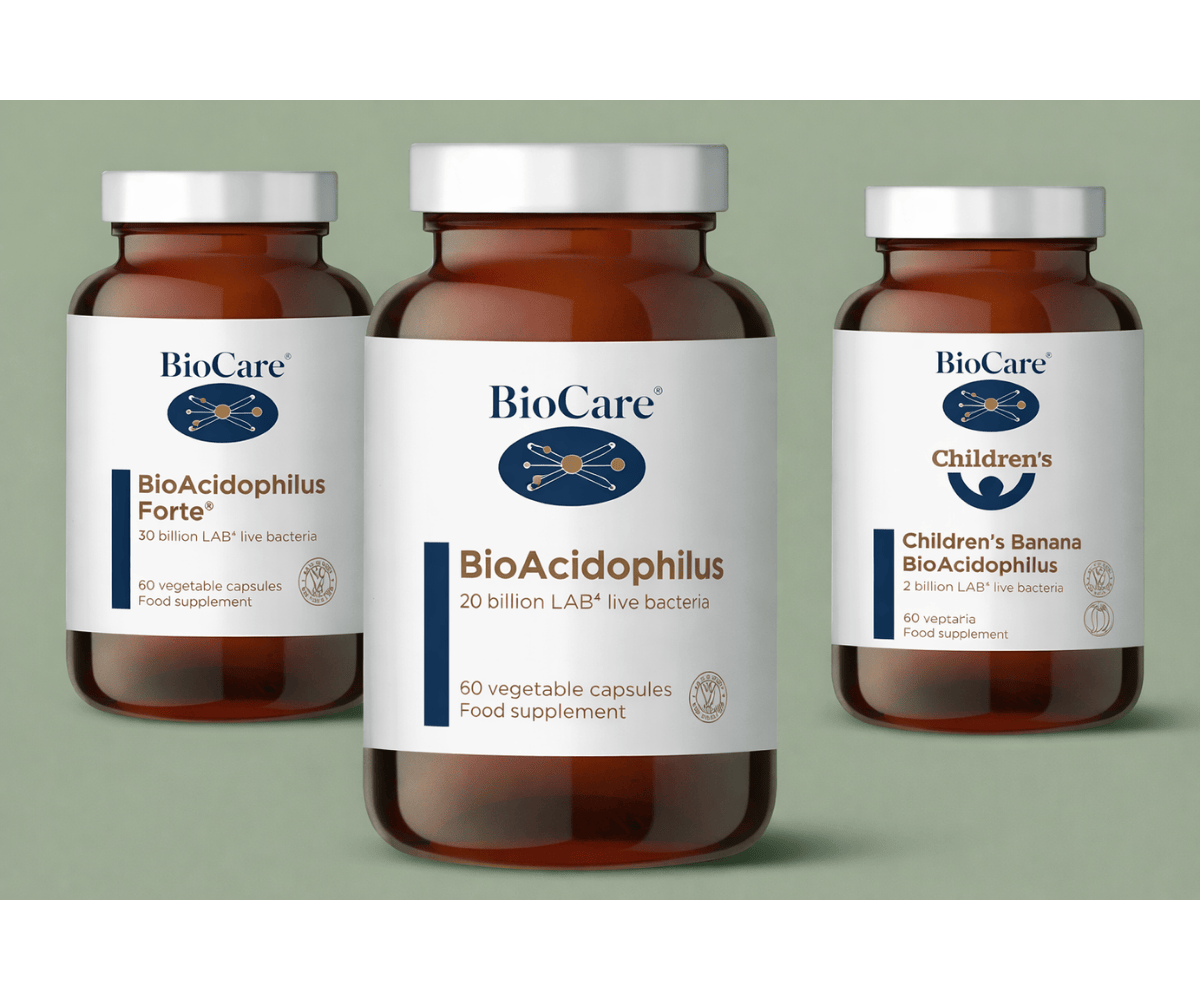
Research shows an IgG elimination diet combined with probiotics may benefit those with migraine plus IBS (12), so supporting the gut microbiome through probiotic foods and supplementation could be one approach to reducing food intolerance symptoms. Providing a range of 'good bacteria' strains in a probiotic supplement may be a positive step toward broad-spectrum gut support.
You can find my ride-or-die probiotic here: BioCare's BioAcidophilus. Use code P8335 (practitioner referral code) at checkout for a 15% discount.
Can a leaky gut be repaired?
Clinical research suggests a variety of nutrients, enzymes, herbs and essential fatty acids may play a role in preventing damage to the gut lining, by nourishing the growth of beneficial microbes and helping shrink the microscopic gaps in a leaky gut through stimulating the regeneration of damaged intestinal lining cells (13).
Glutamine, an amino acid, is a major nutrient used to maintain intestinal barrier function, and has been shown to improve gut barrier function in several experimental conditions (14). It's widely regarded as one of the most important nutrients for supporting leaky gut repair, acting as the primary fuel to strengthen and repair gut lining cells (15).
My 'go to' GI support formula with glutamine is BioCare's GI Complex. Use code P8335 (practitioner referral code) at checkout for a 15% discount.
Uncovering underlying intolerances and temporarily eliminating reactive foods, while also supporting the mechanics of digestion, gut lining integrity and microbial balance, forms an 'outside in' and 'inside out' protocol. This could be the key to cracking the code and bettering your health.

References
1. Gaby A. Food allergy: Nutritional Medicine 2nd ed. Concord, NH: Frits Perlberg Publishing; 2017. Pp.23-30. 60% of the
2. Immunoglobulin G food testing - Annals of Allergy, Asthma & Immunology
3. Role of immunoglobulin G antibodies in diagnosis of food allergy - PMC
5. Food Intolerance* is not the same as Food Allergy? | YorkTest
7. IgG-based elimination diet in migraine plus irritable bowel syndrome - PubMed
8. Ritz BW, Lord RD. Case study: The effectiveness of a dietary supplement regimen in reducing IgG mediated food sensitivity in ADHD. Altern Ther Health Med May-Jun 2005;11(3):72-5.https://pubmed.ncbi.nlm.nih.gov/15943133/
9. IgG-based elimination diet in migraine plus irritable bowel syndrome - PubMed
11. Partners in Leaky Gut Syndrome: Intestinal Dysbiosis and Autoimmunity - PMC
13. Leaky Gut and the Ingredients That Help Treat It: A Review - PMC
14. Glutamine and the regulation of intestinal permeability: from bench to bedside - PubMed
15. Glutamine and barrier function in cultured Caco-2 epithelial cell monolayers - PubMed

Don’t forget to pin it
Ready to stop guessing and start knowing?
If anything in this article sounds familiar, your body may be trying to tell you something. The good news is, you don't have to figure it out alone.
Take the free Find Your FIT Quiz to discover which test or programme suits your symptoms, or book a free 15-minute Personalised FIT Health Review with Becki for a direct, no-obligation conversation about where to start.

About Becki Hawkins
Becki Hawkins, BSc (Hons), mBANT, CNHC, is the founder of FIT Nutrition & Testing Clinic and a Registered Nutritional Therapist with over 20 years of experience. She specialises in evidence-based personalised nutrition and functional testing, helping clients uncover the root causes of digestive issues, hormonal imbalances, and unexplained symptoms. Becki combines clinical expertise with culinary creativity, translating complex test results into practical, delicious nutrition plans that work in real life. Her approach is simple: test, don't guess. Because guessing doesn't heal. Knowing does.