
When Food Isn’t the Problem, Digestion Is

Digestive enzymes explained, and the daily habits that matter more
Bloating after meals. That heavy, overfull feeling twenty minutes in. Reflux that shows up whether or not you've eaten anything unusual. If any of that sounds familiar, you've probably already tried cutting things out of your diet, and probably found it didn't fully solve the problem.
That's because digestion isn't only about what's on your plate. It's about how well your body breaks that food down once it's there, and digestive enzymes are a big part of that process. This guide covers what they actually do, when a supplement genuinely helps, and the daily habits that make more difference than most people expect.
Contents
What digestive enzymes actually do
Signs your digestion might need support
Before you reach for a supplement
When digestive enzyme supplements may help
Common mistakes people make with digestive enzymes
When it's time to look deeper
FAQs
What digestive enzymes actually do
Digestive enzymes are proteins your body produces in the saliva, stomach, pancreas and small intestine. Their job is to break food down into pieces small enough to absorb: proteins into amino acids, fats into fatty acids, carbohydrates into simple sugars.
Stomach acid plays a supporting role here too. It activates certain enzymes and helps unlock minerals like iron and calcium from food. Acid production naturally declines with age, and a recent clinical review found this decline becomes more pronounced from around the mid-life years onward (Mancin et al., 2025, Age-Related Decline of Gastric Secretion: Facts and Controversies). Stress, some medications and long-term dieting can add to that decline at any age.
When either enzyme output or stomach acid is running low, food isn't broken down as efficiently. Undigested material sitting in the gut longer than it should is a common driver of the bloating, gas and heaviness that brings people to search for answers in the first place.
Signs your digestion might need support
A few patterns worth paying attention to:
Bloating or discomfort that shows up reliably after meals, particularly richer or higher-protein ones
Feeling overly full quickly, even from a normal-sized portion
Reflux or a sense that food is 'sitting there'
Digestive symptoms that appeared after a course of antibiotics, an illness, or a period of high stress
Noticeably undigested food in your stool
None of these confirm an enzyme problem on their own. They're common to several digestive issues, from low stomach acid to food intolerances to imbalances in gut bacteria. That's exactly why habits and honest self-observation come before supplements, and why testing exists for when self-observation isn't enough.
Before you reach for a supplement
This is the part most people skip, and it's usually the part that moves the needle most.
Eat more slowly. Digestion starts in the mouth, and rushing limits how much enzyme activity gets going before food even reaches your stomach.
Chew properly. This sounds almost too simple to mention, but a systematic review and meta-analysis of chewing studies found that increased mastication reduced self-reported hunger and, in several trials, altered gut hormone responses linked to satiety (Miquel-Kergoat et al., 2015, Physiology & Behavior). Chewing thoroughly reduces the workload on everything further down the digestive tract.
Go easy on fluids with meals. Large volumes of liquid alongside food can dilute stomach acid at the exact point it needs to be concentrated. Sipping is fine; save the bulk of your hydration for between meals.
Eat in a calm state. This isn't wellness fluff. Digestion runs on your parasympathetic nervous system, and a review of the gut-brain axis found that stress activates the sympathetic 'fight or flight' response, which actively suppresses digestive function and weakens the vagal signalling that keeps gut inflammation in check (Barone et al., 2022, Nutrients). A few slow breaths before eating genuinely helps shift your body into a state that's ready to digest.
If you make no other change, these four are worth trying consistently for a couple of weeks before adding anything else.
Not sure where your own digestion habits stand? The Find Your FIT quiz is a quick way to see which area is worth focusing on first.
When digestive enzyme supplements may help
Enzyme supplements can be a genuinely useful short-term support if you:
Get bloating or discomfort after meals despite eating slowly and calmly
Notice symptoms specifically after richer, higher-fat or higher-protein meals
Are rebuilding digestive capacity after illness, antibiotics or a prolonged stressful period
Suspect reduced stomach acid, which becomes more common with age
They tend to work best as a bridge, supporting digestion while the habits above take effect, or while an underlying cause is being identified, rather than as something to rely on indefinitely without knowing why you need them.
Common mistakes people make with digestive enzymes
Taking them instead of addressing habits, not alongside them. A supplement can't compensate for eating at your desk in four minutes flat.
Assuming all bloating is an enzyme issue. Food intolerances, gut bacterial imbalances and hormonal factors can all produce near-identical symptoms. Treating everything as an enzyme problem can mean months pass without the real cause being addressed.
Using them long-term without knowing why. If you've been taking enzymes for months and still don't know what's actually going on, that's a sign to investigate rather than keep supplementing.
When it's time to look deeper
Habits and short-term enzyme support resolve a lot of everyday digestive discomfort. If symptoms are still showing up regularly after a few weeks of consistent change, that's usually a sign the underlying driver sits somewhere else: gut bacterial imbalance, a food intolerance, or a stress-hormone pattern that habit changes alone won't shift.
This is where testing becomes useful rather than guesswork. Our Gut Microbiome Assessment looks at gut bacterial balance and dysbiosis, paired with a personalised nutrition and gut consultation, so you're working from an actual picture of what's happening rather than another round of trial and error.
The takeaway
Good digestion isn't about restriction, and it isn't something a supplement can fully substitute for. Start with the basics: eating slower, chewing properly, easing off fluids at mealtimes, and giving your body a calm moment before you start. Add enzyme support if it genuinely helps. And if symptoms are still there after doing all of that consistently, it's worth finding out why rather than continuing to guess.
If you're not sure what your digestion actually needs, a Free FIT Health Review is a good place to start.
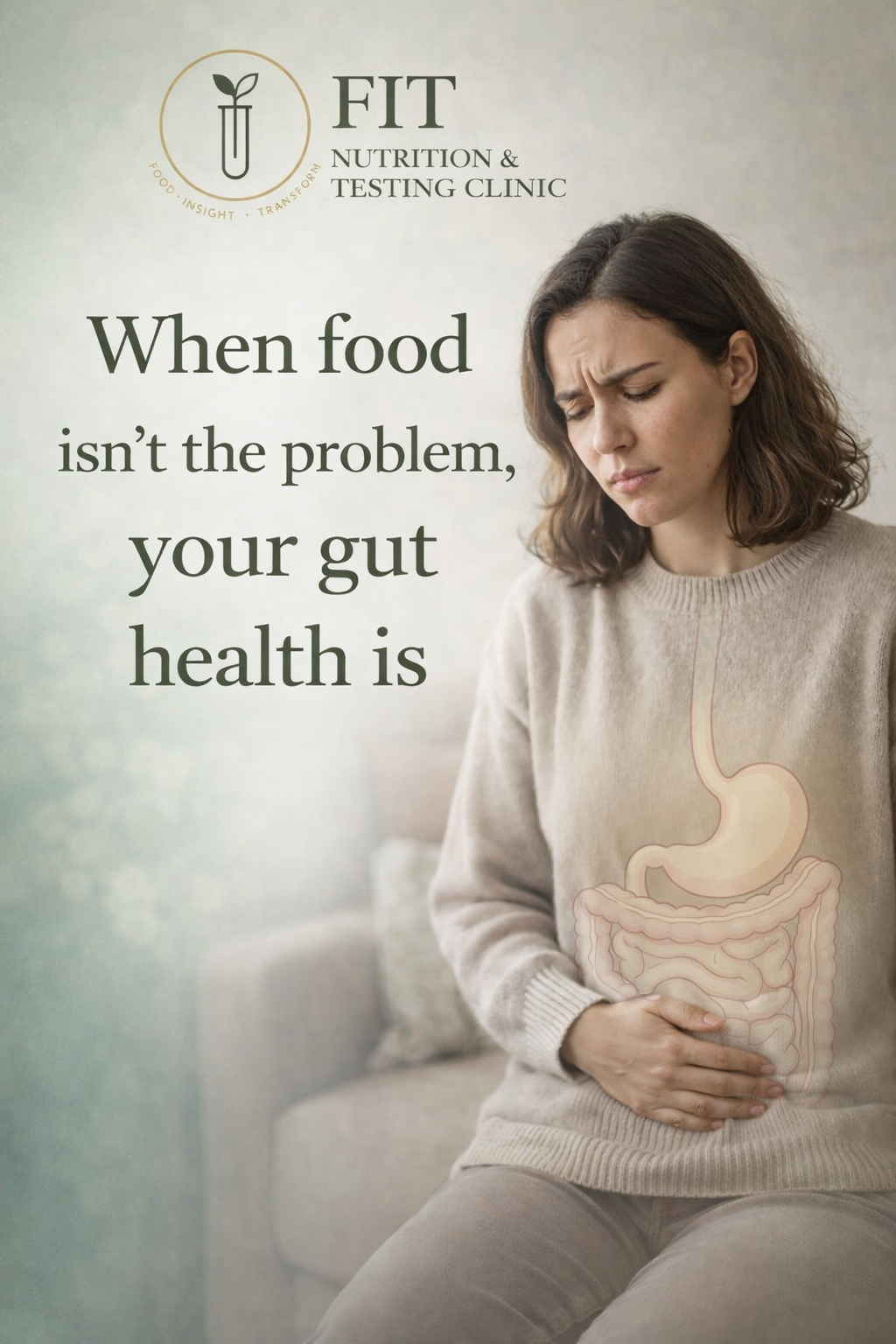
Don’t forget to pin it
FAQs
Do I need to take digestive enzymes with every meal? Not necessarily. Many people only need support with larger or richer meals, or during a specific period, such as recovering from illness or a course of antibiotics. Taking them at every meal indefinitely without knowing why isn't something we'd generally recommend without understanding the underlying cause first.
Can I get enough enzymes from food? Some foods, such as pineapple and papaya, contain natural enzymes, and a varied wholefood diet supports your body's own enzyme production. Food alone won't correct a genuine enzyme insufficiency or significantly low stomach acid, though, which is where supplementation or further investigation may be appropriate.
Are digestive enzyme supplements safe to take long-term? For most people, short courses are considered low risk, but long-term use without a clear reason isn't ideal, partly because it can mask a symptom worth investigating properly. Speak to your GP before starting any supplement if you're on other medication or have an existing health condition.
What's the difference between digestive enzymes and probiotics? Enzymes break food down into absorbable pieces. Probiotics are live bacteria that support the balance of your gut microbiome. They work on different parts of the digestive process and address different things, so one isn't simply a substitute for the other.
Sources:
NHS, Indigestion
Miquel-Kergoat, S. et al. (2015). Effects of chewing on appetite, food intake and gut hormones: A systematic review and meta-analysis. Physiology & Behavior. PubMed
Barone, M. et al. (2022). The Effects of Stress and Diet on the Brain-Gut and Gut-Brain Pathways. Nutrients / PMC. Source
Mancin, L. et al. (2025). Age-Related Decline of Gastric Secretion: Facts and Controversies. PMC
Ready to understand what your body's been trying to tell you? Take the quiz or book your FREE health review.

About Becki Hawkins
Becki Hawkins, BSc (Hons), mBANT, CNHC, is the founder of FIT Nutrition & Testing Clinic and a Registered Nutritional Therapist with over 20 years of experience. She specialises in evidence-based personalised nutrition and functional testing, helping clients uncover the root causes of digestive issues, hormonal imbalances, and unexplained symptoms. Becki combines clinical expertise with culinary creativity, translating complex test results into practical, delicious nutrition plans that work in real life. Her approach is simple: test, don't guess. Because guessing doesn't heal. Knowing does.