
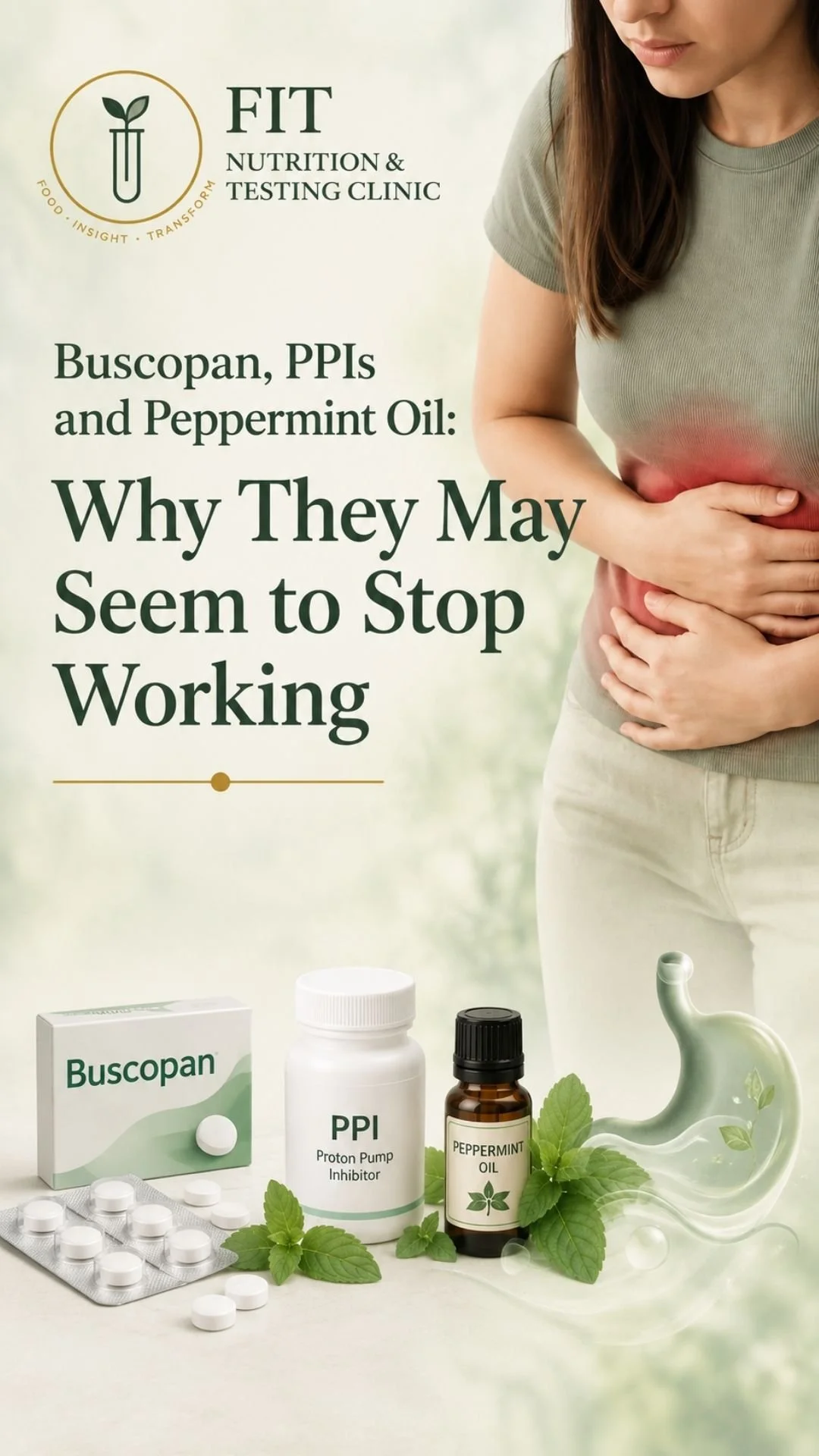
Buscopan, PPIs and Peppermint Oil: Why They May Seem to Stop Working
Still cramping, bloated or burning despite medication? The answer is not always a stronger dose. It may be time to check what the symptom, and the treatment response, is actually telling you.
Contents
When the medicine that used to help doesn't
First: these medicines do completely different jobs
Seven reasons your digestive medication may seem to have stopped working
Does long-term PPI use damage the gut? The balanced answer
What to do when Buscopan or peppermint oil is no longer enough
What to do when a PPI is no longer controlling reflux
When you should seek medical help, not a nutrition test
Where nutrition and testing may fit
Simple steps you can start today
FAQs
When the medicine that used to help doesn't
Perhaps Buscopan used to settle the cramps within half an hour. Peppermint oil made eating out feel less risky. Omeprazole stopped the burning, until the breakthrough reflux returned.
When a digestive medicine appears to stop working, it is easy to assume that your body has become 'used to it', that you need a higher dose, or that your gut is simply getting worse. Sometimes the treatment does need reviewing. But often, the more useful question is not just 'why has this stopped working?' It is 'was this medicine targeting the symptom I have now, and what has changed?'
Buscopan, peppermint oil and proton pump inhibitors (PPIs) are not interchangeable. They act on different parts of digestion and are used for different symptom patterns. Understanding that difference is the starting point.
First: these medicines do completely different jobs
Buscopan: for bowel spasm. Buscopan contains hyoscine butylbromide, an antispasmodic. It relaxes smooth muscle in the digestive tract and can reduce painful cramping. NICE recommends considering antispasmodics for IBS according to the person's predominant symptoms, alongside dietary and lifestyle advice (1).
If the pain is no longer mainly caused by spasm, or constipation, diarrhoea, distension or another condition is now driving it, relaxing the bowel muscle may provide incomplete relief.
Peppermint oil: also an antispasmodic. Enteric-coated peppermint-oil capsules release in the bowel and relax intestinal muscle. A 2022 meta-analysis found peppermint oil performed better than placebo for overall IBS symptoms and abdominal pain, although adverse effects were more common and the authors rated the evidence very low quality (2).
Peppermint oil can also cause heartburn or indigestion. That means something taken for lower-gut cramps may aggravate upper-gut burning in a person prone to reflux (3).
PPIs: for acid-related conditions. PPIs, including omeprazole, lansoprazole and esomeprazole, reduce stomach-acid production. They can be highly effective for gastro-oesophageal reflux disease (GORD), healing erosive oesophagitis and treating or preventing some ulcers. NICE recommends a four- or eight-week PPI course for GORD, followed by the lowest dose that controls recurring symptoms when ongoing treatment is needed (4).
A PPI will not directly treat bowel spasm, constipation, fermentation, food reactions or every cause of chest and upper-abdominal discomfort. If acid is not the main driver, stronger acid suppression may not solve the problem.
Seven reasons your digestive medication may seem to have stopped working
1. The symptom has changed. 'Stomach pain' can mean burning behind the breastbone, upper-abdominal fullness, trapped wind, bowel cramps or pain related to constipation. The same word may describe a different mechanism over time. A medicine that once matched the symptom may no longer match it.
2. It is being taken at the wrong time. PPIs are not instant antacids. Many work best when taken consistently before a meal, commonly 30 to 60 minutes before breakfast, depending on the product and prescriber's instructions. Enteric-coated peppermint oil also needs spacing from indigestion remedies, because early dissolution can reduce its intended effect and worsen heartburn (3, 5). Always check the leaflet or ask a pharmacist rather than altering the dose yourself.
3. The original diagnosis needs reviewing. Persistent burning does not always equal acid reflux. Non-acid reflux, functional heartburn, oesophageal inflammation, motility disorders and, occasionally, cardiac pain can mimic it. Equally, recurrent lower-abdominal cramping may involve constipation, diarrhoea, pelvic conditions, coeliac disease, inflammatory bowel disease or a disorder of gut-brain interaction. Treatment failure is a reason to reassess, not simply to layer on more products.
4. Everyday triggers are overpowering symptom control. Large or late meals, alcohol, individual trigger foods, lying down after eating, constipation, weight gain where relevant, poor sleep and stress can all influence reflux or IBS symptoms. This is not about blaming you, or banning every enjoyable food. It is about identifying your pattern instead of following a generic internet avoid-list.
5. Peppermint is worsening reflux. Peppermint may settle bowel spasm while aggravating heartburn in some people. If your cramps improve but burning, regurgitation or indigestion worsens, speak to your pharmacist or GP rather than assuming you need more peppermint oil.
6. Rebound symptoms are being mistaken for treatment failure. After long-term PPI use, stopping can cause temporary rebound acid symptoms. The American Gastroenterological Association advises that people discontinuing long-term PPIs should be warned about this possibility. It does not mean everyone should remain on a PPI forever, and it does not mean everyone should stop. The indication, dose and plan need individual review (6).
7. More than one problem is present. IBS and reflux can overlap. A person may have genuine acid reflux plus constipation-driven abdominal pressure, food-related symptoms or heightened gut sensitivity. One medication may be doing its job while another contributor remains untreated.
Does long-term PPI use damage the gut? The balanced answer
This subject attracts dramatic headlines. Observational studies have linked long-term PPI use with infections, nutrient deficiencies, kidney disease, fractures and microbiome changes, but an association does not automatically prove the medicine caused the outcome. The American College of Gastroenterology states that higher-quality evidence has not shown significant increases in most proposed harms, apart from intestinal infections, and that the established benefits of PPIs generally outweigh theoretical risks when there is a clear indication (7).
The right message is not 'PPIs are bad.' It is: use the right medicine, for the right reason, at the lowest effective dose, with appropriate review. Some people, such as those with severe erosive oesophagitis, oesophageal ulcer or stricture, Barrett's oesophagus or a high gastrointestinal-bleeding risk, may have strong reasons for long-term treatment (6).
Do not stop a prescribed PPI because of something you read online. Ask your GP or pharmacist to review why you take it, whether the dose remains appropriate and whether any taper is suitable. Rebound symptoms can occur, and stopping is not appropriate for everyone.
What to do when Buscopan or peppermint oil is no longer enough
Antispasmodics can be useful tools; needing them repeatedly is also useful information. Track what happens around the symptom rather than only recording that it occurred.
Where is the pain, upper abdomen, around the navel, low down or one-sided?
Is it cramping, burning, pressure, stabbing or fullness?
Does passing stool or wind change it?
Are stools hard, loose, urgent, incomplete or alternating?
Does it follow a particular food, portion size, stressful event or menstrual phase?
Are symptoms new, escalating, waking you at night or accompanied by weight loss or bleeding?
NICE advises that persistent IBS symptoms should receive further dietary guidance from a suitably qualified healthcare professional; exclusion diets such as low FODMAP should not be improvised or continued indefinitely (1).
For more on why similar digestive symptoms can reflect different patterns, read What Is Gut Dysbiosis?
What to do when a PPI is no longer controlling reflux
Check how you take it. Confirm the exact medicine, dose and timing with your pharmacist or prescriber. Do not double the dose independently.
Review the diagnosis. If correctly taken treatment is not working, your GP may need to reconsider whether symptoms are acid-related and whether H. pylori testing, endoscopy, pH monitoring or another assessment is appropriate. These tests are selected medically; they are not all needed routinely.
Review the mechanics. Notice meal size, late eating, lying down after meals and personal triggers. Elevating the head of the bed may help night-time reflux; stacking pillows is not the same and may fold the body at the waist.
Check overlapping symptoms. Bloating, constipation and abdominal pressure can coexist with reflux. Treating only the burning may leave the wider digestive picture unchanged.
Arrange a medication review. NICE recommends annual review for people needing long-term dyspepsia treatment and encourages stepping down or stopping when appropriate, unless an underlying condition or co-medication requires continuation (4).
When you should seek medical help, not a nutrition test
Please arrange prompt medical assessment for new, persistent or worsening symptoms. Seek urgent help for severe chest pain, particularly with breathlessness, sweating or pain spreading to the arm, back, neck or jaw, as this can be cardiac rather than digestive.
Contact your GP urgently if you have difficulty or pain when swallowing, vomiting blood, black stools, persistent vomiting, unexplained weight loss, anaemia, a new abdominal mass, severe or localised pain, jaundice or a marked change in symptoms. NICE recommends urgent endoscopy for adults with dysphagia and for adults aged 55 or over who have reflux or dyspepsia with weight loss (8).
Nutrition support should complement, not delay, appropriate medical investigation.
Where nutrition and testing may fit
Once red flags and appropriate medical investigations have been considered, a structured nutrition assessment can help connect symptoms with diet, bowel pattern, stress, sleep, medication and lifestyle. Testing can be useful when it answers a specific clinical question; it should never be the automatic response to every stomach ache.
If symptoms include ongoing bloating, altered stools or suspected microbial imbalance, explore the FIT Gut Microbiome Assessment. It combines at-home laboratory testing with a one-to-one consultation, expert interpretation and a personalised plan.
If food reactions appear reproducible and you want structured support rather than removing foods at random, read What Does the NHS Say About Food Intolerance? before deciding whether an assessment is appropriate.
Prefer to begin without testing? A General Nutrition Consultation can review your symptom history, diet and practical next steps first.
For ongoing, supported change, explore the FIT Nutritional Therapy Programmes.
Not sure which route fits? Book a Free FIT Health Review or take the Find Your FIT Quiz.
Simple steps you can start today
Take medication exactly as prescribed or directed on the packet; check timing with a pharmacist.
Keep a seven-day symptom, food, bowel and medication diary, without changing everything at once.
Eat more slowly and notice whether meal size matters more than a single ingredient.
Avoid lying down for around three hours after eating if reflux is a problem.
Support regular bowel movements with appropriate fluid, movement and fibre, but increase fibre gradually if bloating is prominent.
Do not start a highly restrictive diet or stop prescribed medication without professional guidance.
The FIT takeaway
Buscopan, peppermint oil and PPIs are not failures, and they are not interchangeable. Each can be genuinely helpful when it matches the symptom and is used correctly.
But if you are reaching for relief more often, increasing products or still planning your life around cramps, bloating or burning, the answer may not be another quick fix. It may be time to review the diagnosis, check the medication, look at the whole digestive pattern and choose the next investigation carefully.
Because symptom relief matters. Understanding why the symptom keeps returning matters too.
Frequently Asked Questions
Can your body become immune to Buscopan? Buscopan appearing less effective does not prove that you have developed tolerance. The symptom, trigger, bowel pattern or underlying condition may have changed. Ask a pharmacist or GP before increasing the dose.
Why is omeprazole not working anymore? Possible explanations include incorrect timing, missed doses, persistent lifestyle or mechanical triggers, non-acid reflux, a different diagnosis or a complication needing assessment. Correctly taken treatment that no longer controls symptoms should be reviewed medically.
Can peppermint oil make acid reflux worse? Yes. Heartburn and indigestion are recognised side effects of peppermint oil. Speak to a pharmacist or doctor if this occurs or persists (3).
Should I stop taking a PPI because of long-term side effects? Not without a medication review. PPIs have important benefits and some people need long-term therapy. The decision should be based on whether there is still a clinical indication, not fear generated by a list of possible associations (6, 7).
What test do I need for persistent bloating and cramps? There is no single universal 'gut test.' The right starting point depends on your symptoms, duration, bowel pattern, medical history and red flags. Sometimes the correct next step is GP investigation; sometimes it is a nutrition consultation; sometimes targeted testing adds useful information.
References:
NICE. Irritable bowel syndrome in adults: diagnosis and management (CG61).
Ingrosso MR et al. Systematic review and meta-analysis: efficacy of peppermint oil in irritable bowel syndrome. Alimentary Pharmacology & Therapeutics, 2022.
NHS. About peppermint oil; side effects and precautions. Reviewed 2025.
NICE. Gastro-oesophageal reflux disease and dyspepsia in adults: investigation and management (CG184).
Katz PO et al. ACG Clinical Guideline for the Diagnosis and Management of Gastroesophageal Reflux Disease. American Journal of Gastroenterology, 2022.
Targownik LE et al. AGA Clinical Practice Update on De-Prescribing of Proton Pump Inhibitors. Gastroenterology, 2022.
American College of Gastroenterology. GERD guideline: long-term PPI issues and safety, 2022.
NICE. Dyspepsia and GORD in adults: urgent endoscopy quality statement.
Black CJ et al. British Society of Gastroenterology guidelines on functional dyspepsia. Gut, 2022.
Don’t forget to pin it.
If anything in this article sounds familiar, your body may be trying to tell you something. The good news is, you don't have to figure it out alone.
Take the free Find Your FIT Quiz to discover which test or programme suits your symptoms, or book a free 15-minute Personalised FIT Health Review with Becki for a direct, no-obligation conversation about where to start.

About Becki Hawkins
Becki Hawkins, BSc (Hons), mBANT, CNHC, is the founder of FIT Nutrition & Testing Clinic and a Registered Nutritional Therapist with over 20 years of experience. She specialises in evidence-based personalised nutrition and functional testing, helping clients uncover the root causes of digestive issues, hormonal imbalances, and unexplained symptoms. Becki combines clinical expertise with culinary creativity, translating complex test results into practical, delicious nutrition plans that work in real life. Her approach is simple: test, don't guess. Because guessing doesn't heal. Knowing does.